Review steps for timed rhetorical analysis essay in groups of 4 - write steps on individual post-its, then view another group's work and write check marks next to any similar steps to validate their thinking.
Flow Map we made of steps for Rhetorical Analysis Essay
HW: Independent reading - 500 pages by 2/15
Wednesday, January 13, 2016

Wednesday, December 9, 2015
AGENDA 12/9
Discuss yesterday's video, "How Prisons Can Help Inmates Live Meaningful Lives" by Dan Pacholke
Review viewing guide and your reactions/responses
Watch TED Talk by Nalini Nadkarni, "Life Science in Prison"
Introduce writing assignment - start by creating one introduction paragraph tonight, handwritten or typed, for one of our semester texts
HW: Finish reading The Scarlet Letter for Friday. Write one introduction paragraph tonight, handwritten or typed, for one of our semester texts.
Tuesday, December 8, 2015
AGENDA 12/8
View TED Talk, "How Prisons Can Help Inmates Live Meaningful Lives" by Dan Pacholke
Complete viewing guide
HW: Finish reading The Scarlet Letter for Friday.
Complete viewing guide
HW: Finish reading The Scarlet Letter for Friday.
Monday, November 23, 2015
AGENDA 11/23
Writing effective introductions for argument essays
Understanding whether argument is of fact, value, or policy
HW: For each of the four prompts, turn the prompt into a question (or questions) and write the questions down on the prompt paper. Additionally, note whether the argument called for is an argument of fact, value, and/or policy. Then, on notebook paper, write a FATT claim for each of the four prompts, preferably one per each side of the page (so 2 pieces of paper total).
Sample Critical Annotation in MLA format
Sample Critical Annotation in MLA format
Tips for MLA format:
Directions for Critical Annotation . Submit revision to Turnitin.com by 11/30
Thursday, November 19, 2015
AGENDA 11/19
Introduce vocabulary from Thoreau's "Where I Lived and What I Lived For"
Begin reading and annotating "Where I Lived and What I Lived For"
HW: Revise critical annotation. Finish optional Clybourne Park essay if you attended the play. Complete independent reading. Have you earned 3-7 monster points this week?
Sample Critical Annotation in MLA format
Begin reading and annotating "Where I Lived and What I Lived For"
HW: Revise critical annotation. Finish optional Clybourne Park essay if you attended the play. Complete independent reading. Have you earned 3-7 monster points this week?
Sample Critical Annotation in MLA format
Tips for MLA format:
Directions for Critical Annotation . Submit revision to Turnitin.com by 11/30
Friday, November 6, 2015
AGENDA 11/6
Discuss and introduce Optional Learning Opportunity for Clybourne Park including Cast List
Finish watching A Raisin in the Sun
HW: Independent Reading
Finish watching A Raisin in the Sun
HW: Independent Reading
Thursday, October 8, 2015
AGENDA 10/8
Make a “circle map” with the word “Models” in the small center circle, and a box near the edge of the paper surrounding the circle, like this:
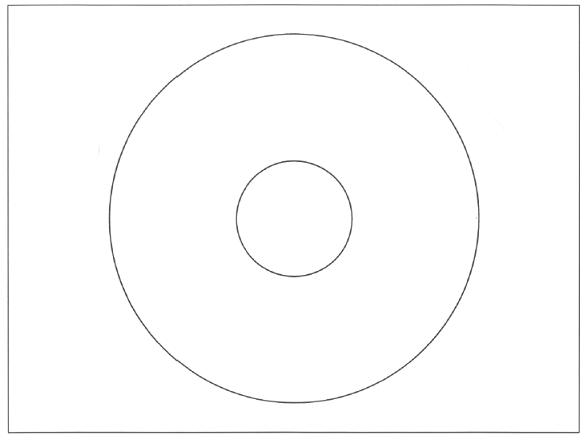
Then, in the larger ring, (the “donut” as opposed to the “donut hole”), list words or ideas associated with models (and by models, I mean, “supermodels”), words like, “beautiful” or “thin” or “long-legged.” Doesn’t have to be single words, either, can be phrases, like “smiling for a camera” or whatever you happen to know about models.
Then, in the larger ring, (the “donut” as opposed to the “donut hole”), list words or ideas associated with models (and by models, I mean, “supermodels”), words like, “beautiful” or “thin” or “long-legged.” Doesn’t have to be single words, either, can be phrases, like “smiling for a camera” or whatever you happen to know about models.
Watch the short Dove film “Evolution.” After the film, students should first discuss your reactions with a sharing partner: What did this make you think about? How might you add to your maps?
Next, add ideas to your circle map, circling any new information added in green marker or highlighter pens (I have plenty of markers near the red-and-yellow bulletin board, and highlighter pens near the blue vocabulary charts). It has to be green--the color is important. The color green is to designate information gained from sources, not prior knowledge (because green is like spring grass, and the sources help new ideas GROW or are where new thinking SPRINGS from...get it?)
Next, please show the short TED Talk, Cameron Russell’s “Looks Aren’t Everything.” Again, you should add to your maps, discuss with sharing partners, then circle the new information added in green (you can even be snazzy and use a different shade of green than you used originally if you want, to distinguish between the two sources).
Finally, write in the outside box and reflect as follows. At the top: Summarize this map--what does this circle map explain or show? At the bottom, discuss the significance of this map and these ideas: So what do you now realize about models/the beauty industry? What did you think about today? Why is it important? How does it build on the pieces we read last week? Lastly, use a red marker (again, the color matters!) to draw boxes around these reflection responses. (Red is for “Stop and Reflect.” Get it, STOP? like a stop sign)
HW: Please finish the thinking maps for homework if you do not finish in class. Otherwise, please complete independent reading for homework.
Subscribe to:
Posts (Atom)